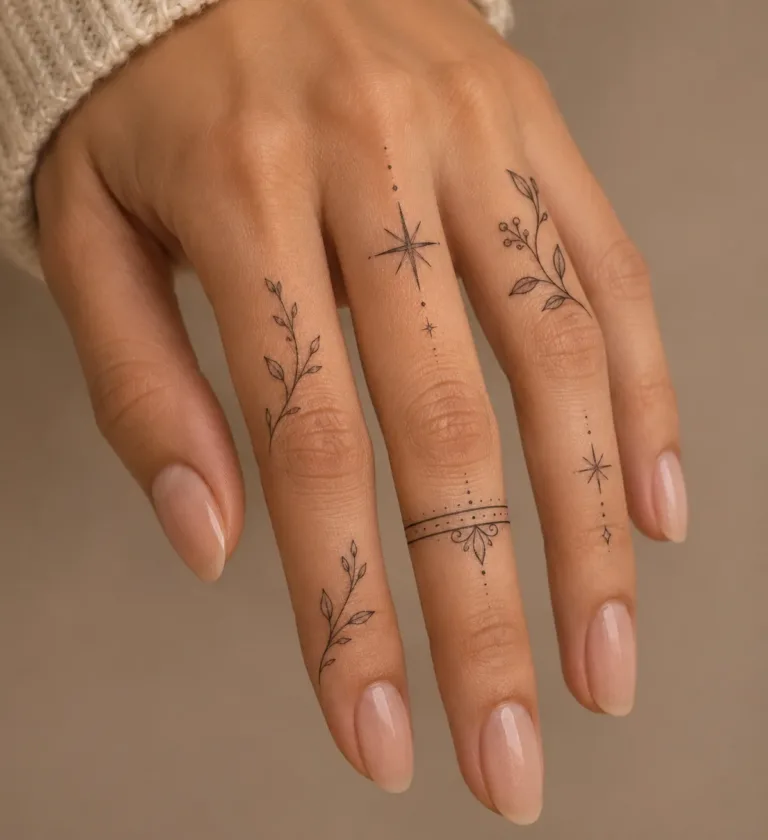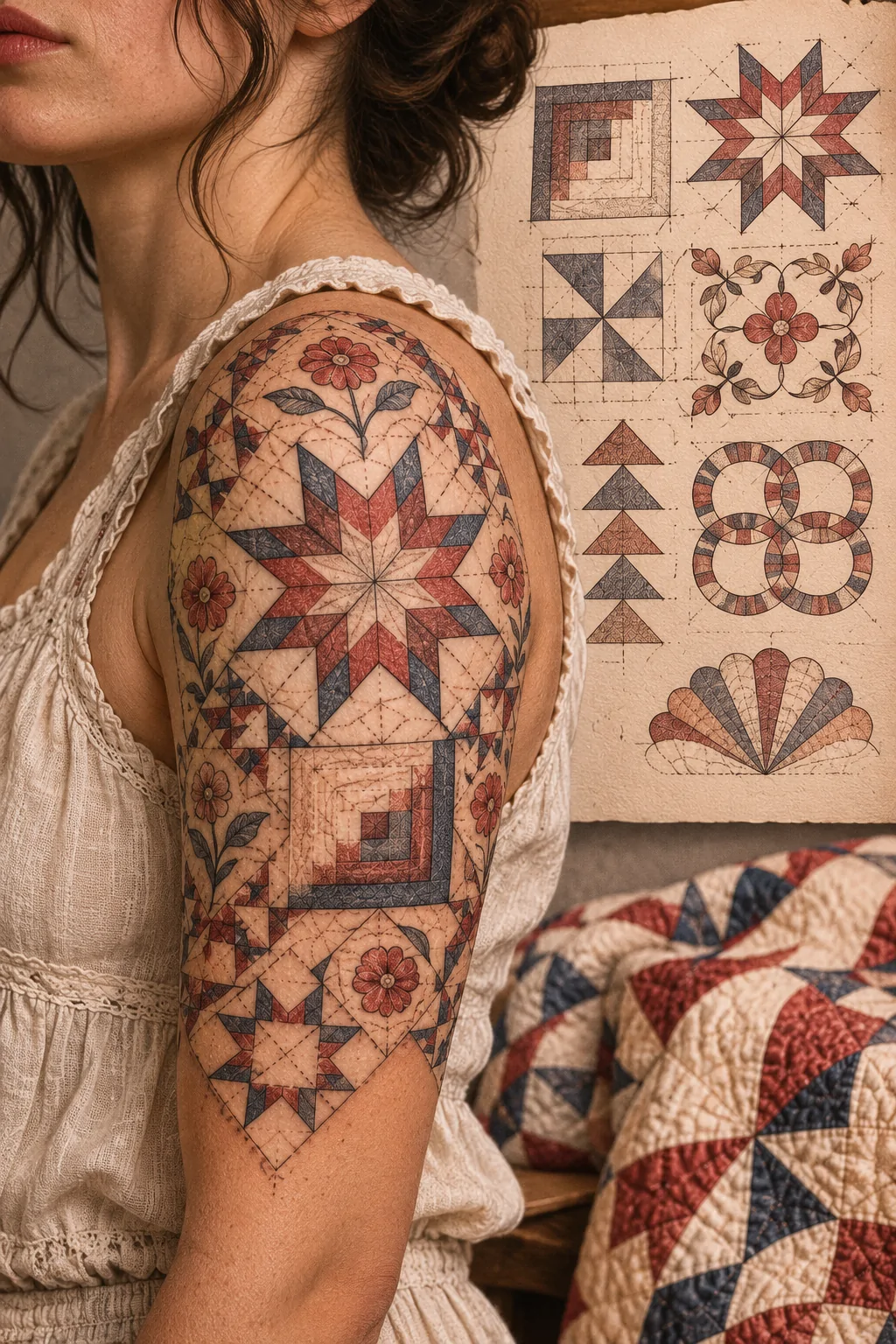
Quilt pattern Tattoo Ideas bring the warmth of handmade textiles into tattoo design. This collection explores fifteen ways to translate quilt blocks, stitched-looking geometry, floral appliqué, and meaningful color into artwork that feels personal rather than copied. Think about the pattern language first, then let your artist refine scale, line weight, contrast, and placement so the finished piece stays clear as it settles into the skin.
The strongest quilt-inspired tattoos balance repetition with one memorable detail. A limited palette can echo a favorite blanket, while blackwork or fine line can make the idea feel quieter and more contemporary. Use these concepts as a starting point for a consultation, and bring your own fabric memories, symbols, or initials to make the design genuinely yours.
1. Patchwork Star Blocks: Quilt Pattern Tattoo Ideas
Patchwork Star Blocks can turn a familiar quilt language into a tattoo with structure and softness. Ask your artist to test the block at the intended size, keep negative space open, and adjust the edges to follow the body. Small personal details such as a meaningful color, a flower, or a repeated stitch mark can make the reference feel intentional without overcrowding the composition.
Before committing, compare the design from a distance and in motion, because quilt geometry can look different as the body bends. A clear silhouette, comfortable placement, and realistic maintenance plan will help the pattern remain legible and connected to your story. Ask your artist how line weight, contrast, and spacing should be adjusted for your skin and the tattoo’s long-term readability.
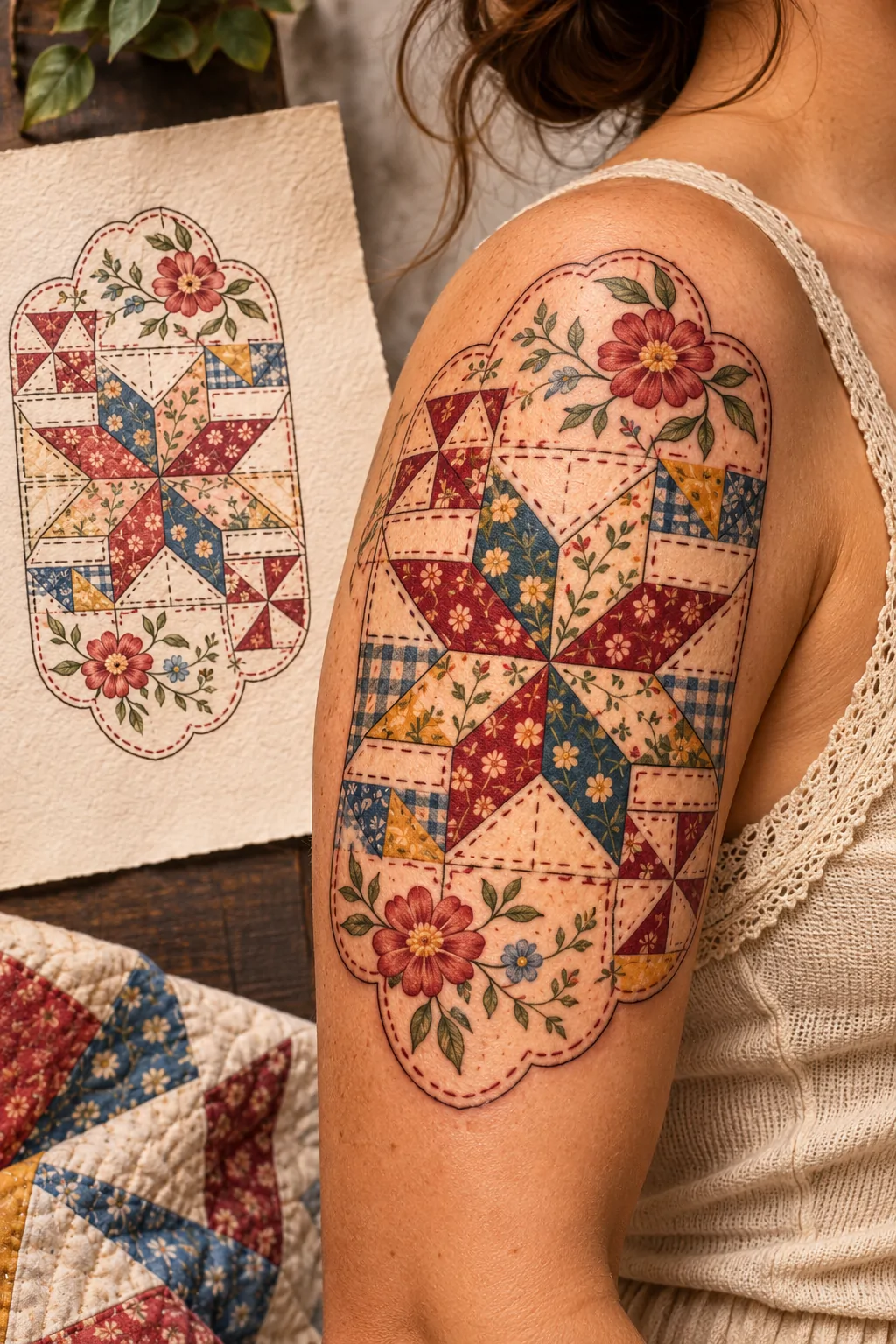
2. Floral Quilt Squares
Floral Quilt Squares can turn a familiar quilt language into a tattoo with structure and softness. Ask your artist to test the block at the intended size, keep negative space open, and adjust the edges to follow the body. Small personal details such as a meaningful color, a flower, or a repeated stitch mark can make the reference feel intentional without overcrowding the composition.
Before committing, compare the design from a distance and in motion, because quilt geometry can look different as the body bends. A clear silhouette, comfortable placement, and realistic maintenance plan will help the pattern remain legible and connected to your story. Ask your artist how line weight, contrast, and spacing should be adjusted for your skin and the tattoo’s long-term readability.
3. Geometric Quilt Bands
Geometric Quilt Bands can turn a familiar quilt language into a tattoo with structure and softness. Ask your artist to test the block at the intended size, keep negative space open, and adjust the edges to follow the body. Small personal details such as a meaningful color, a flower, or a repeated stitch mark can make the reference feel intentional without overcrowding the composition.
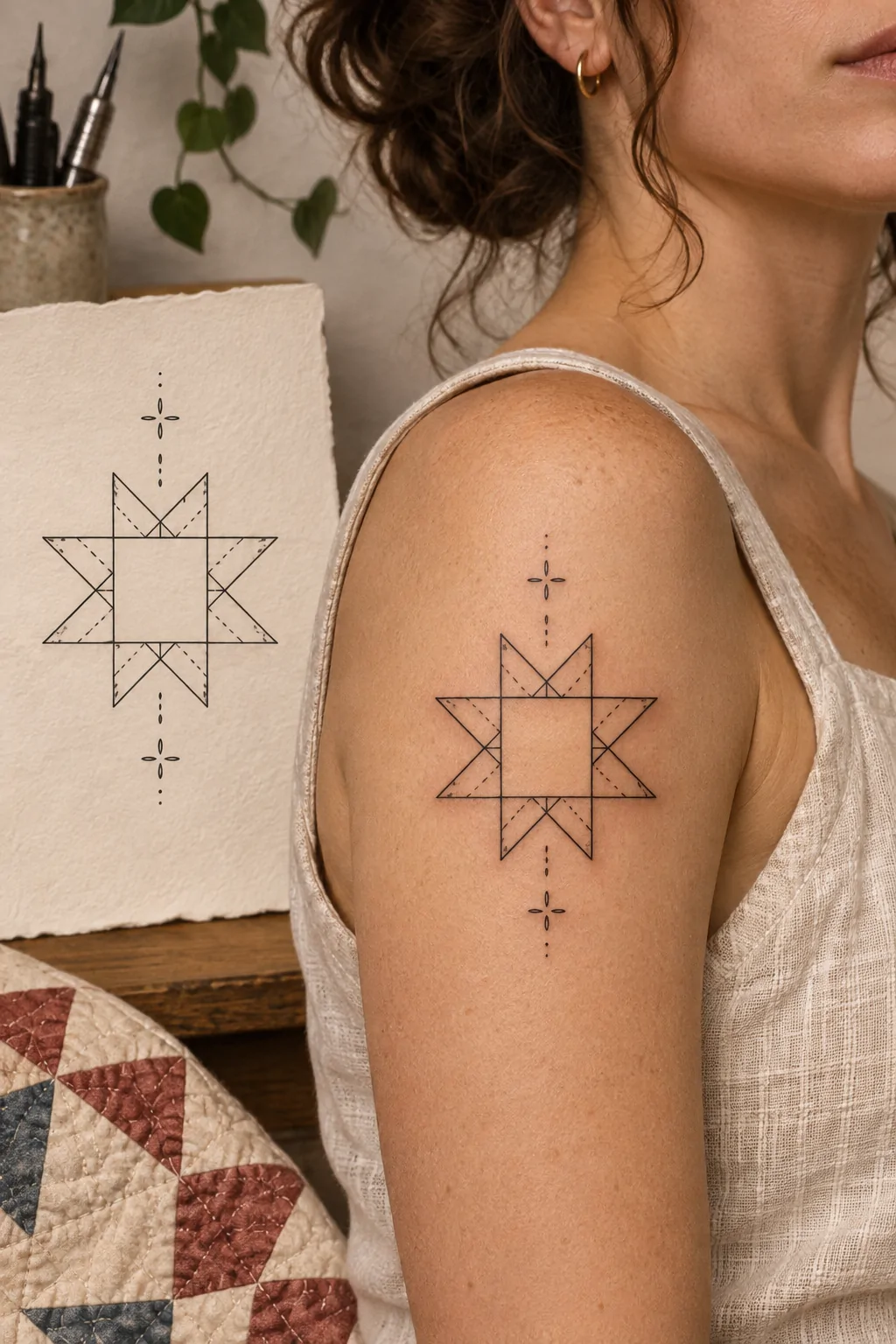
Before committing, compare the design from a distance and in motion, because quilt geometry can look different as the body bends. A clear silhouette, comfortable placement, and realistic maintenance plan will help the pattern remain legible and connected to your story. Ask your artist how line weight, contrast, and spacing should be adjusted for your skin and the tattoo’s long-term readability.
4. Heirloom Blanket Motifs
Heirloom Blanket Motifs can turn a familiar quilt language into a tattoo with structure and softness. Ask your artist to test the block at the intended size, keep negative space open, and adjust the edges to follow the body. Small personal details such as a meaningful color, a flower, or a repeated stitch mark can make the reference feel intentional without overcrowding the composition.
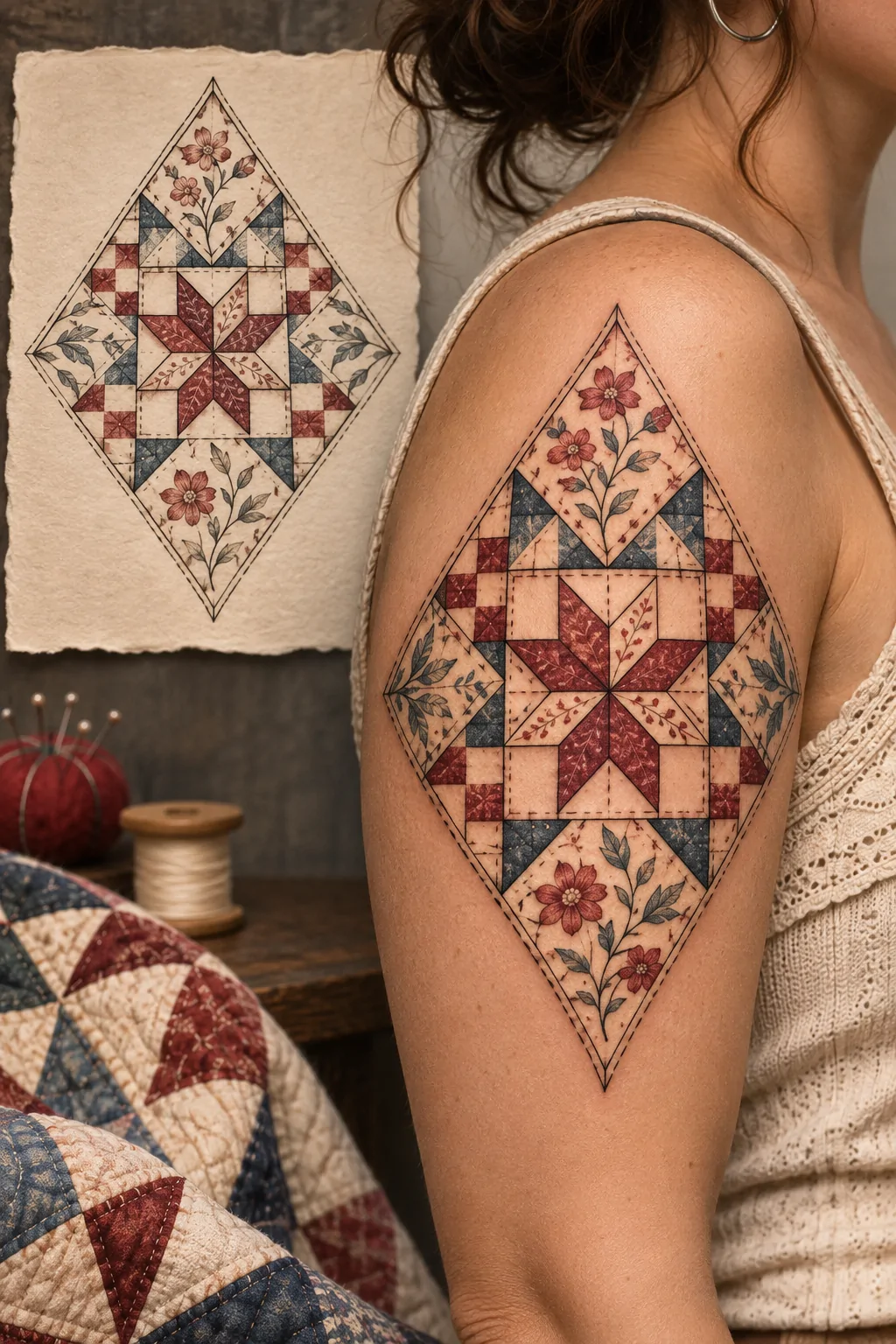
Before committing, compare the design from a distance and in motion, because quilt geometry can look different as the body bends. A clear silhouette, comfortable placement, and realistic maintenance plan will help the pattern remain legible and connected to your story. Ask your artist how line weight, contrast, and spacing should be adjusted for your skin and the tattoo’s long-term readability.
5. Colorful Fabric-Inspired Ink
Colorful Fabric-Inspired Ink can turn a familiar quilt language into a tattoo with structure and softness. Ask your artist to test the block at the intended size, keep negative space open, and adjust the edges to follow the body. Small personal details such as a meaningful color, a flower, or a repeated stitch mark can make the reference feel intentional without overcrowding the composition.
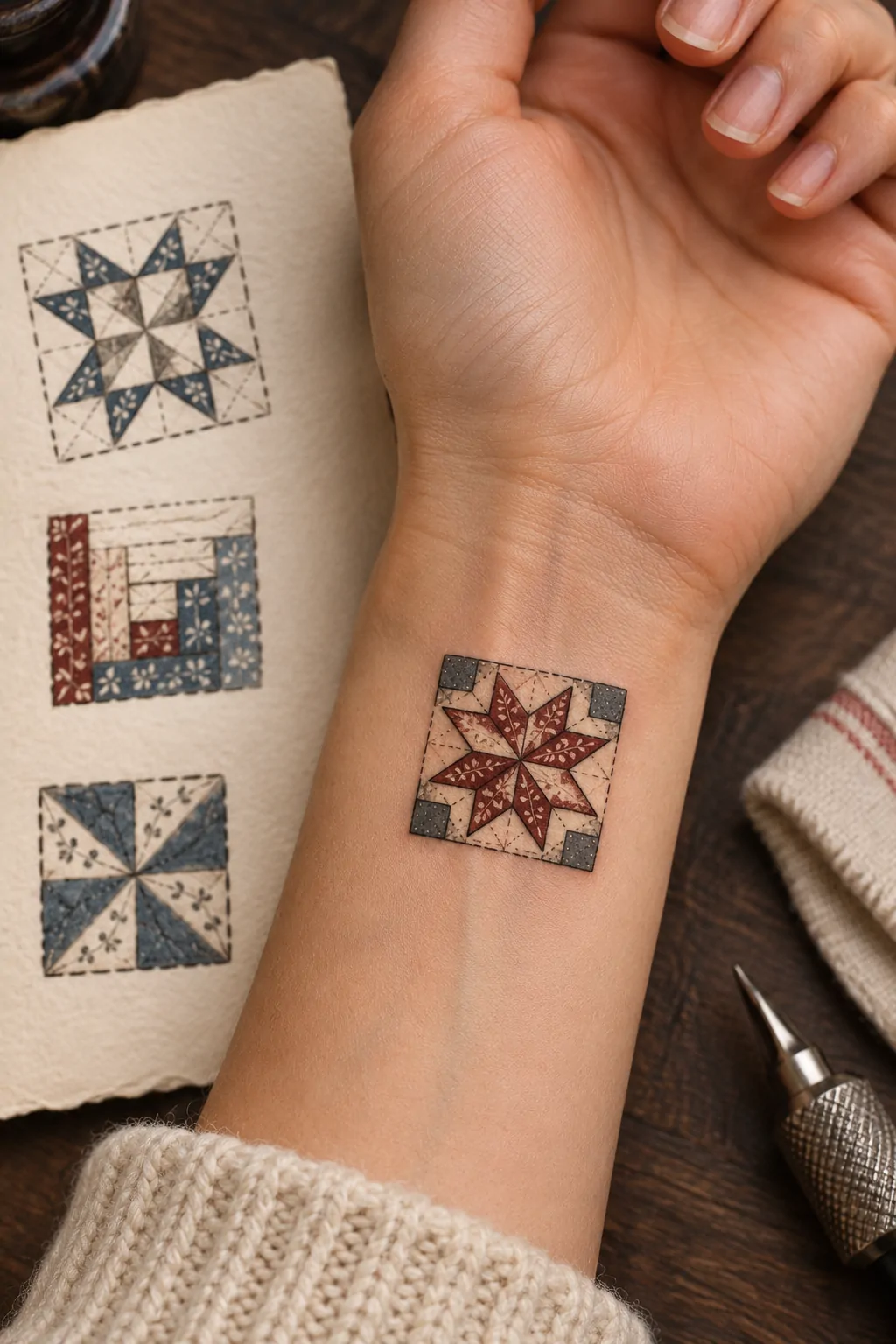
Before committing, compare the design from a distance and in motion, because quilt geometry can look different as the body bends. A clear silhouette, comfortable placement, and realistic maintenance plan will help the pattern remain legible and connected to your story. Ask your artist how line weight, contrast, and spacing should be adjusted for your skin and the tattoo’s long-term readability.
6. Minimal Quilt-Line Tattoo
Minimal Quilt-Line Tattoo can turn a familiar quilt language into a tattoo with structure and softness. Ask your artist to test the block at the intended size, keep negative space open, and adjust the edges to follow the body. Small personal details such as a meaningful color, a flower, or a repeated stitch mark can make the reference feel intentional without overcrowding the composition.

Before committing, compare the design from a distance and in motion, because quilt geometry can look different as the body bends. A clear silhouette, comfortable placement, and realistic maintenance plan will help the pattern remain legible and connected to your story. Ask your artist how line weight, contrast, and spacing should be adjusted for your skin and the tattoo’s long-term readability.
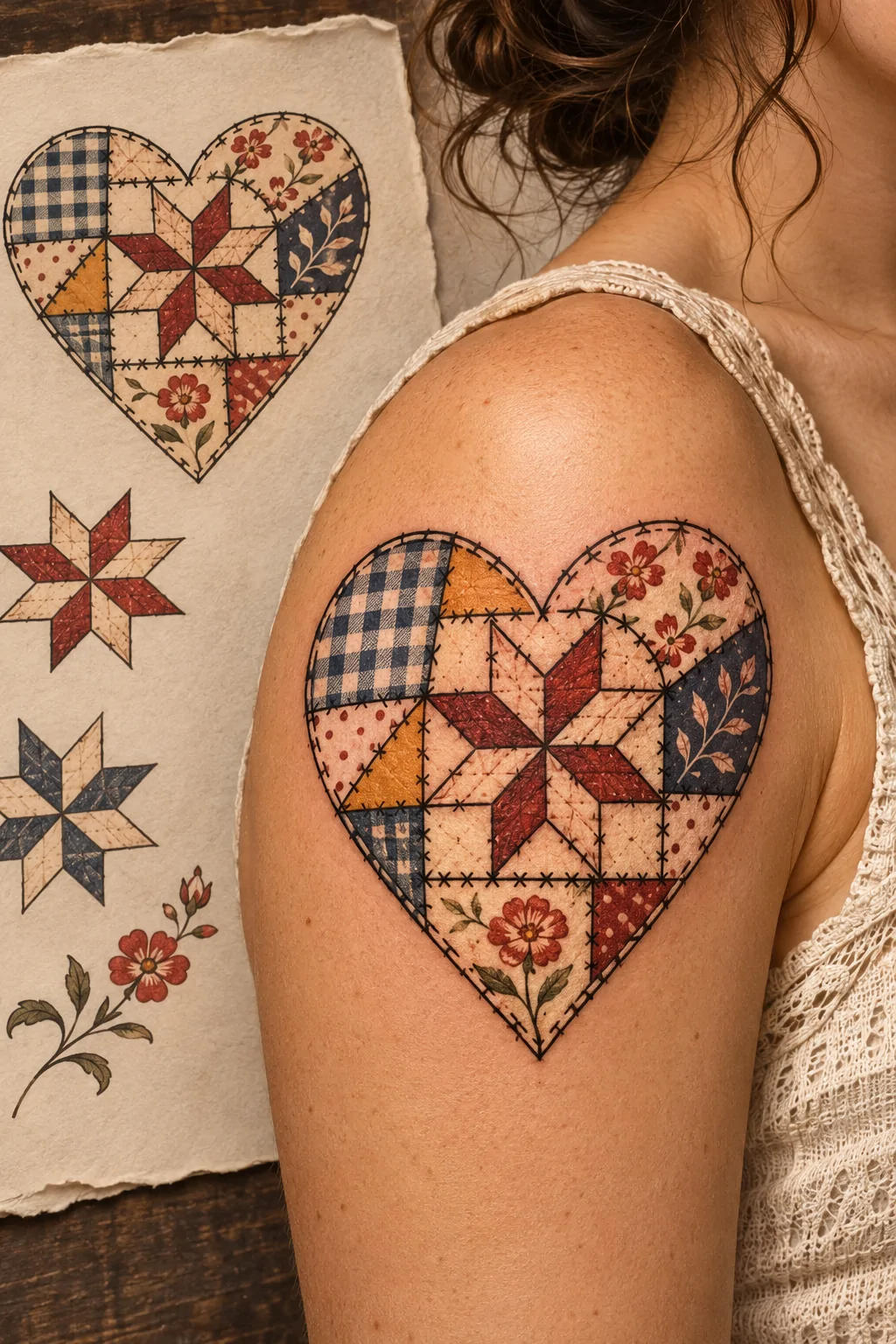
7. Traditional Patchwork Heart
Traditional Patchwork Heart can turn a familiar quilt language into a tattoo with structure and softness. Ask your artist to test the block at the intended size, keep negative space open, and adjust the edges to follow the body. Small personal details such as a meaningful color, a flower, or a repeated stitch mark can make the reference feel intentional without overcrowding the composition.
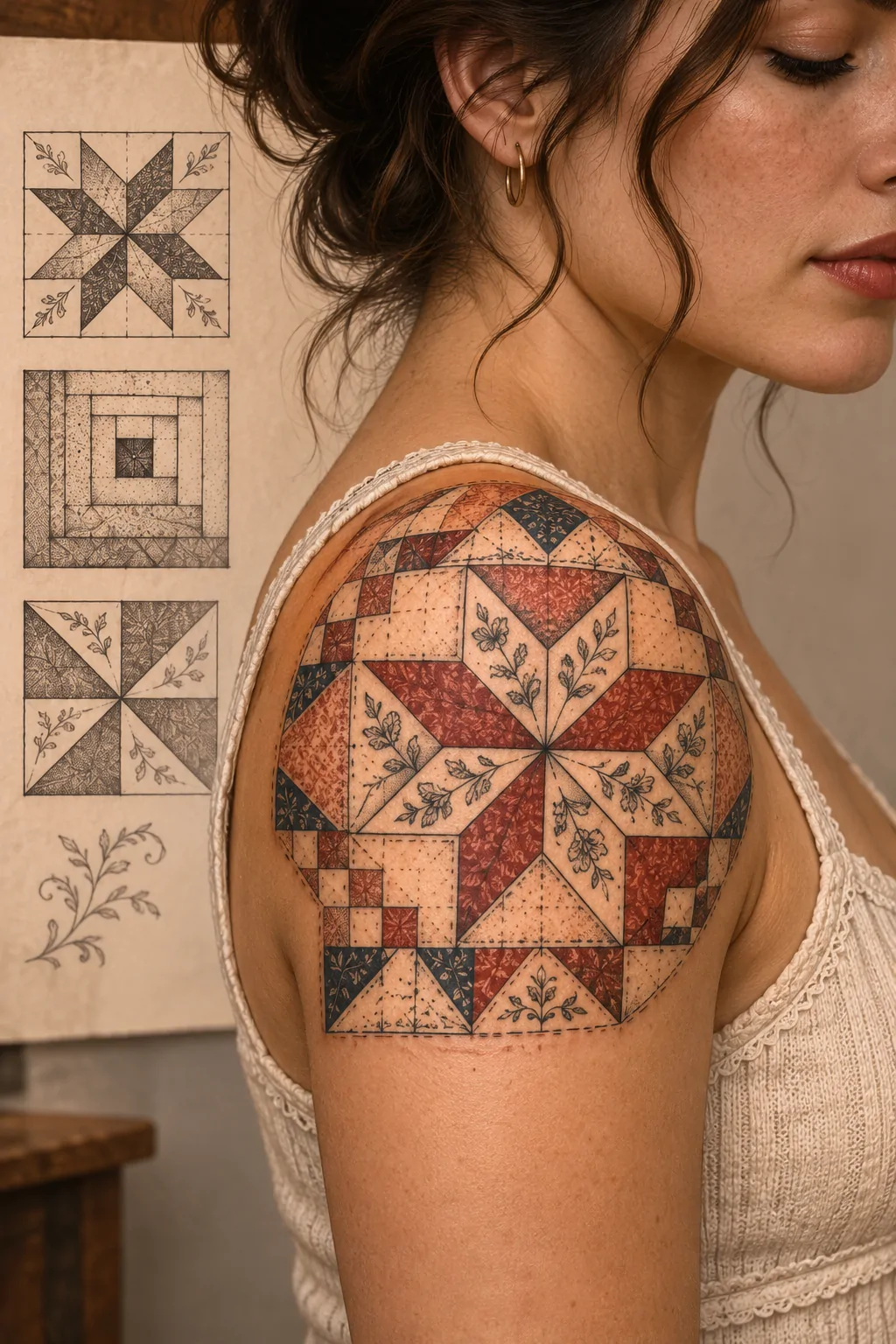
Before committing, compare the design from a distance and in motion, because quilt geometry can look different as the body bends. A clear silhouette, comfortable placement, and realistic maintenance plan will help the pattern remain legible and connected to your story. Ask your artist how line weight, contrast, and spacing should be adjusted for your skin and the tattoo’s long-term readability.
8. Quilted Diamond Composition
Quilted Diamond Composition can turn a familiar quilt language into a tattoo with structure and softness. Ask your artist to test the block at the intended size, keep negative space open, and adjust the edges to follow the body. Small personal details such as a meaningful color, a flower, or a repeated stitch mark can make the reference feel intentional without overcrowding the composition.
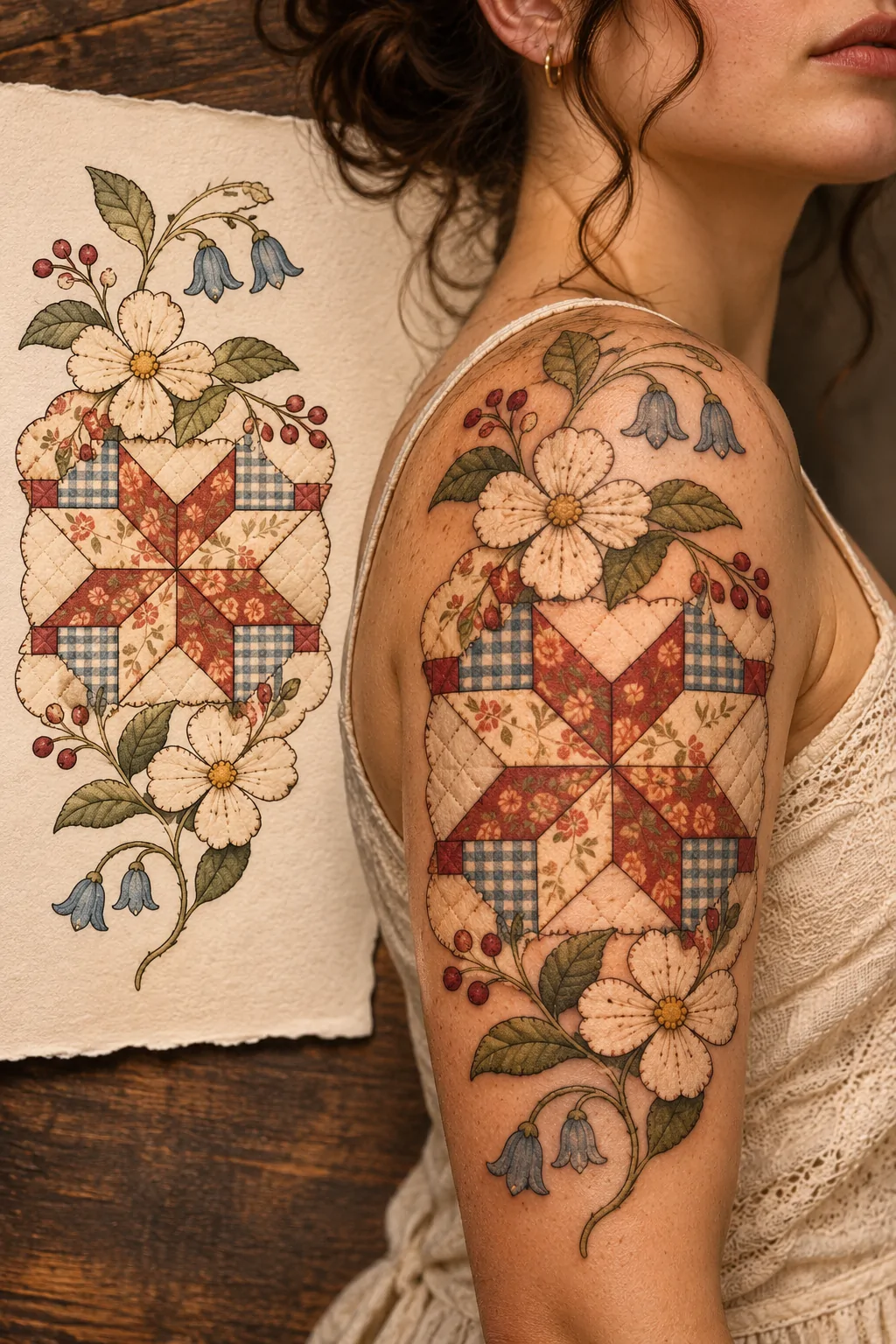
Before committing, compare the design from a distance and in motion, because quilt geometry can look different as the body bends. A clear silhouette, comfortable placement, and realistic maintenance plan will help the pattern remain legible and connected to your story. Ask your artist how line weight, contrast, and spacing should be adjusted for your skin and the tattoo’s long-term readability.
9. Botanical Appliqué Details
Botanical Appliqué Details can turn a familiar quilt language into a tattoo with structure and softness. Ask your artist to test the block at the intended size, keep negative space open, and adjust the edges to follow the body. Small personal details such as a meaningful color, a flower, or a repeated stitch mark can make the reference feel intentional without overcrowding the composition.

Before committing, compare the design from a distance and in motion, because quilt geometry can look different as the body bends. A clear silhouette, comfortable placement, and realistic maintenance plan will help the pattern remain legible and connected to your story. Ask your artist how line weight, contrast, and spacing should be adjusted for your skin and the tattoo’s long-term readability.
10. Small Wrist Quilt Motif
Small Wrist Quilt Motif can turn a familiar quilt language into a tattoo with structure and softness. Ask your artist to test the block at the intended size, keep negative space open, and adjust the edges to follow the body. Small personal details such as a meaningful color, a flower, or a repeated stitch mark can make the reference feel intentional without overcrowding the composition.
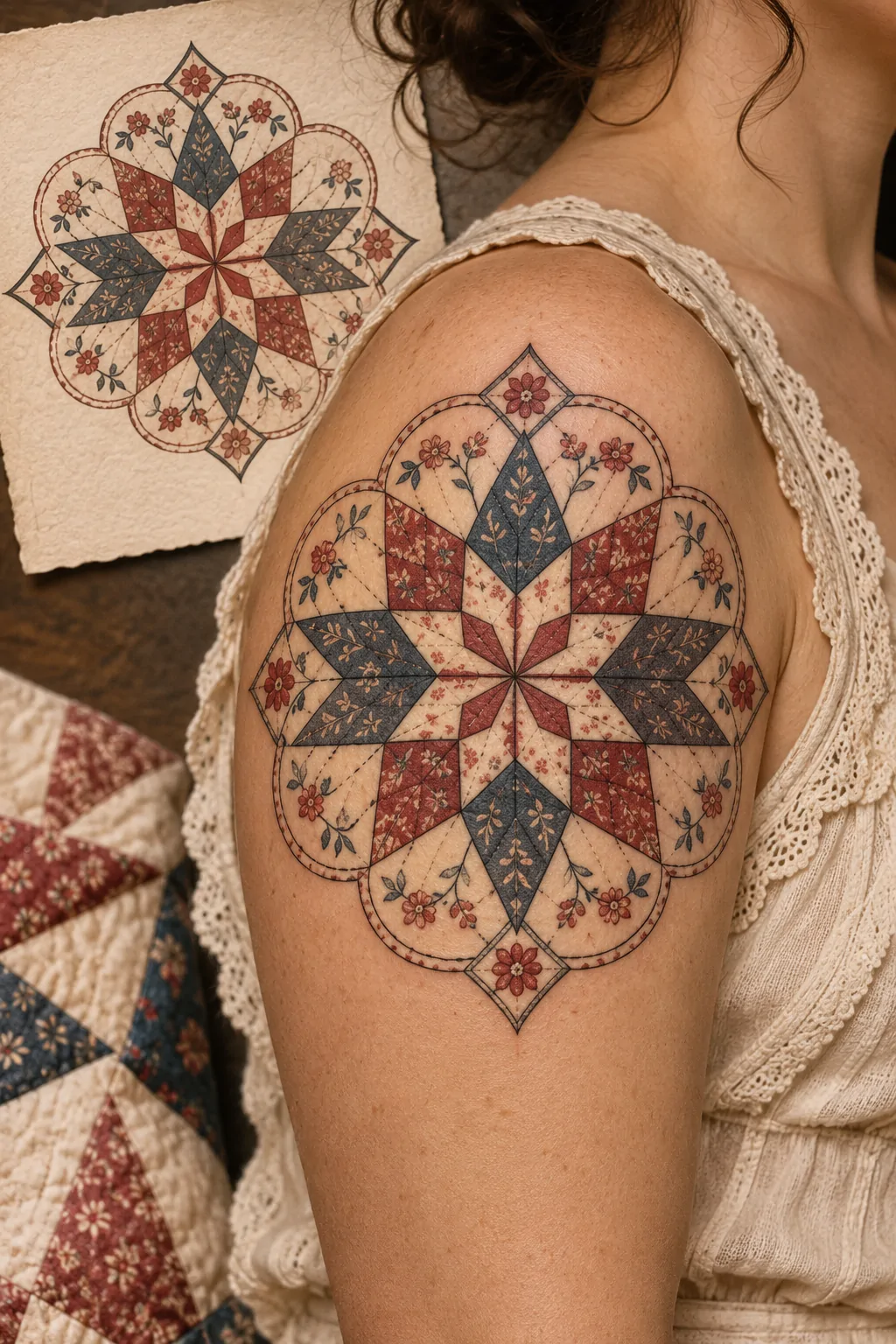
Before committing, compare the design from a distance and in motion, because quilt geometry can look different as the body bends. A clear silhouette, comfortable placement, and realistic maintenance plan will help the pattern remain legible and connected to your story. Ask your artist how line weight, contrast, and spacing should be adjusted for your skin and the tattoo’s long-term readability.
11. Shoulder Quilt Panel
Shoulder Quilt Panel can turn a familiar quilt language into a tattoo with structure and softness. Ask your artist to test the block at the intended size, keep negative space open, and adjust the edges to follow the body. Small personal details such as a meaningful color, a flower, or a repeated stitch mark can make the reference feel intentional without overcrowding the composition.
Before committing, compare the design from a distance and in motion, because quilt geometry can look different as the body bends. A clear silhouette, comfortable placement, and realistic maintenance plan will help the pattern remain legible and connected to your story. Ask your artist how line weight, contrast, and spacing should be adjusted for your skin and the tattoo’s long-term readability.
12. Blackwork Quilt Geometry
Blackwork Quilt Geometry can turn a familiar quilt language into a tattoo with structure and softness. Ask your artist to test the block at the intended size, keep negative space open, and adjust the edges to follow the body. Small personal details such as a meaningful color, a flower, or a repeated stitch mark can make the reference feel intentional without overcrowding the composition.
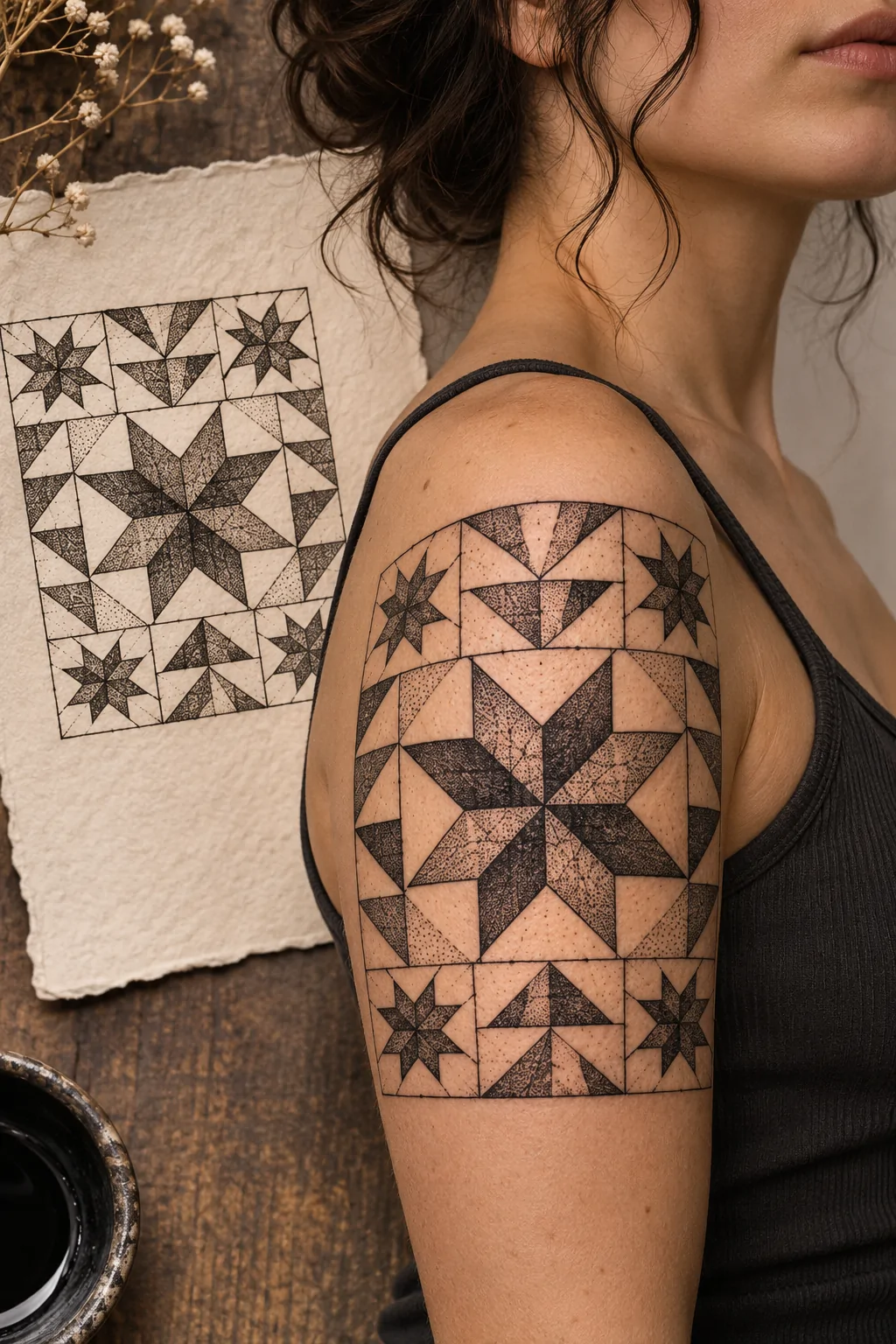
Before committing, compare the design from a distance and in motion, because quilt geometry can look different as the body bends. A clear silhouette, comfortable placement, and realistic maintenance plan will help the pattern remain legible and connected to your story. Ask your artist how line weight, contrast, and spacing should be adjusted for your skin and the tattoo’s long-term readability.
13. Vintage Quilt Medallion
Vintage Quilt Medallion can turn a familiar quilt language into a tattoo with structure and softness. Ask your artist to test the block at the intended size, keep negative space open, and adjust the edges to follow the body. Small personal details such as a meaningful color, a flower, or a repeated stitch mark can make the reference feel intentional without overcrowding the composition.
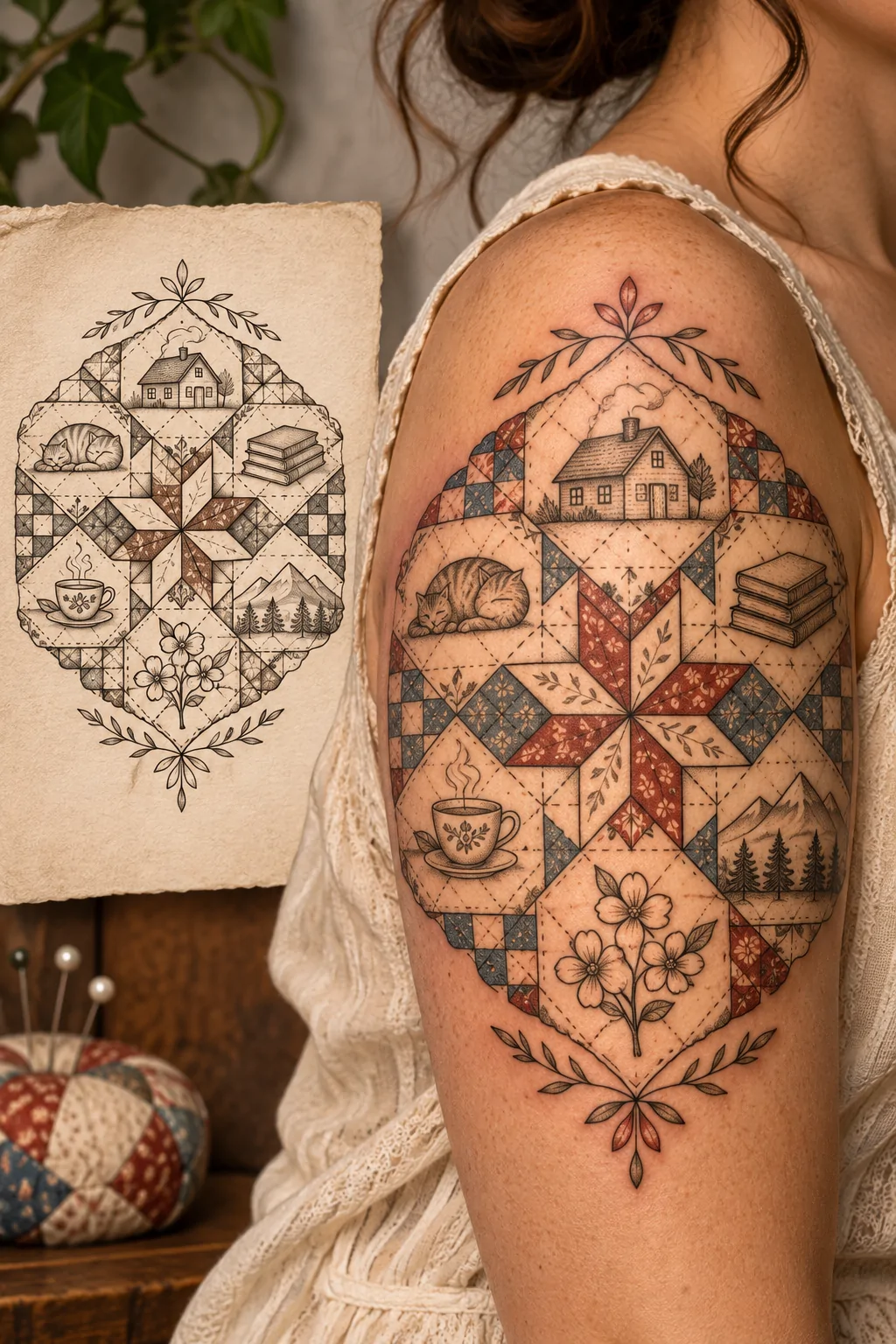
Before committing, compare the design from a distance and in motion, because quilt geometry can look different as the body bends. A clear silhouette, comfortable placement, and realistic maintenance plan will help the pattern remain legible and connected to your story. Ask your artist how line weight, contrast, and spacing should be adjusted for your skin and the tattoo’s long-term readability.
14. Personal Memory Quilt
Personal Memory Quilt can turn a familiar quilt language into a tattoo with structure and softness. Ask your artist to test the block at the intended size, keep negative space open, and adjust the edges to follow the body. Small personal details such as a meaningful color, a flower, or a repeated stitch mark can make the reference feel intentional without overcrowding the composition.

Before committing, compare the design from a distance and in motion, because quilt geometry can look different as the body bends. A clear silhouette, comfortable placement, and realistic maintenance plan will help the pattern remain legible and connected to your story. Ask your artist how line weight, contrast, and spacing should be adjusted for your skin and the tattoo’s long-term readability.
15. Custom Quilt Pattern Sleeve
Custom Quilt Pattern Sleeve can turn a familiar quilt language into a tattoo with structure and softness. Ask your artist to test the block at the intended size, keep negative space open, and adjust the edges to follow the body. Small personal details such as a meaningful color, a flower, or a repeated stitch mark can make the reference feel intentional without overcrowding the composition.
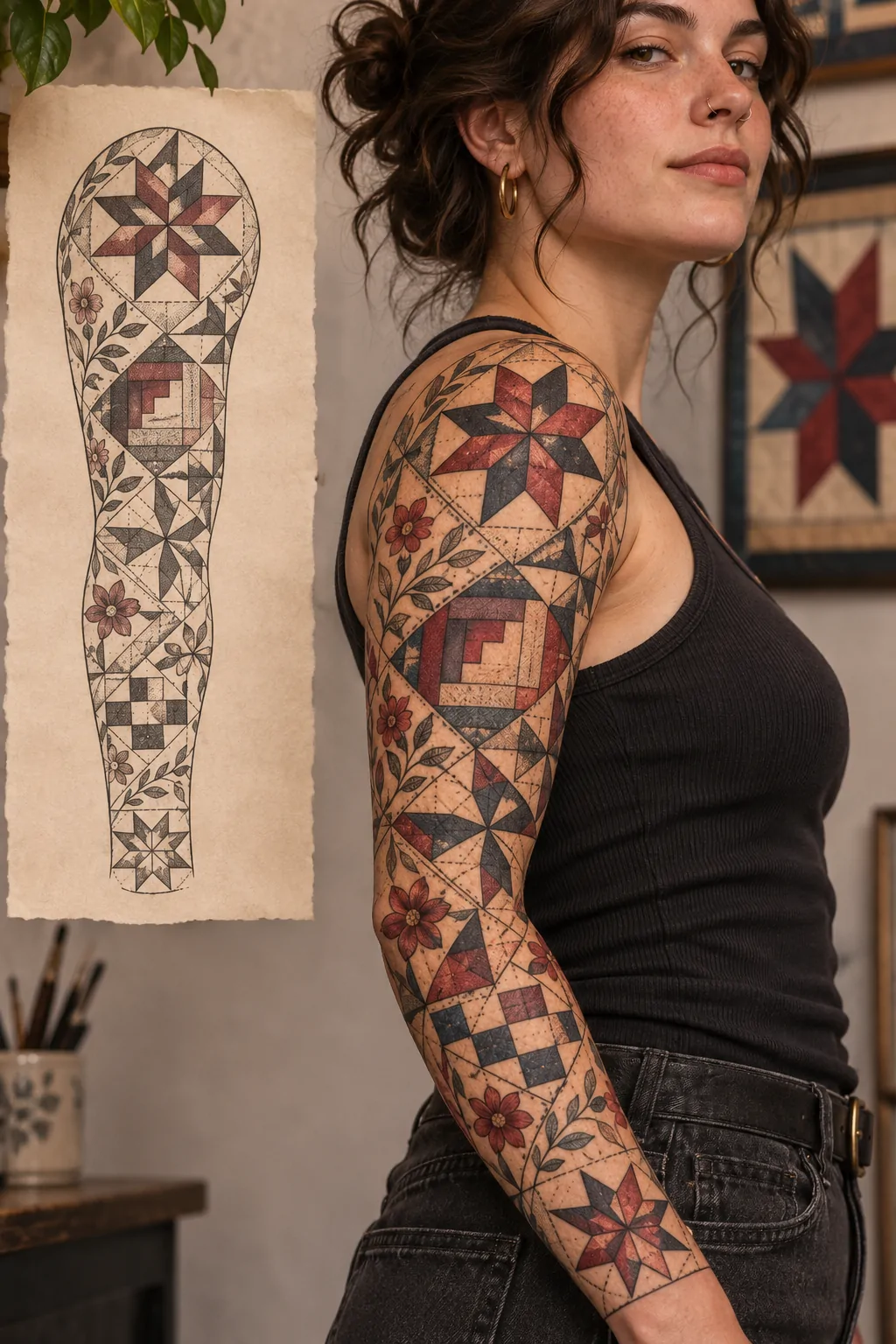
Before committing, compare the design from a distance and in motion, because quilt geometry can look different as the body bends. A clear silhouette, comfortable placement, and realistic maintenance plan will help the pattern remain legible and connected to your story. Ask your artist how line weight, contrast, and spacing should be adjusted for your skin and the tattoo’s long-term readability.